


Point Blank (1967): The Criterion Collection

Updated: May 11
Film Noir UK advisory board member Andrew Kelly turns his attention to John Boorman's neo-noir masterpiece Point Blank (1967) which has been released by The Criterion Collection in the UK. Plus, a chance to win a copy!
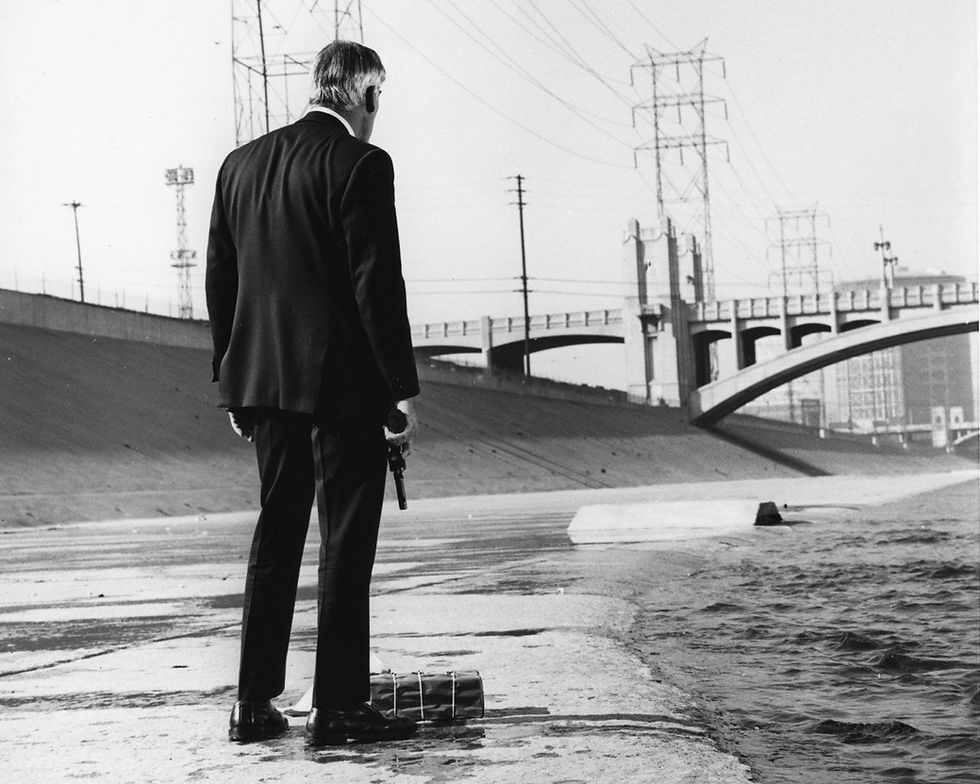
John Boorman made Point Blank (1967) – now released in a superb edition in The Criterion Collection –‘partly out of wisdom and partly out of innocence’ as he told writer Geoff Dyer in an interview included here as one of many interesting extras. The wisdom came from Boorman’s deep knowledge of film and his work at BBC Bristol where he had pioneered short documentaries and docudramas often of individuals, such as his 1963 series Citizen ’63; his innocence meant that he could create something new and special with his first colour feature and first Hollywood film.
Based on the novel by Richard Stark – Donald E Westlake – Boorman had been passed a script by the press agent and wannabee producer Judd Bernard while working on his documentary on D. W. Griffith for BBC One broadcast in 1966. He did not like the script but got friendly with Lee Marvin. They agreed to work together if there was a new screenplay.

Marvin gave him cast and script approval; after this, final cut was always something Boorman demanded in his work. Marvin’s promise led Boorman to resign from BBC Bristol where he had just finished his drama The Quarry and documentary on Griffith, and abandoning a planned programme on Chrstopher Isherwood.
Boorman felt Marvin was attracted to the film because of the brutality he had encountered in the Second World War. He wrote in his memoir Adventures of a Suburban Boy that ‘In one sense Point Blank was a study of Marvin, and I saw it as an extension of my documentary work, the studies I had made of individuals. The young Marvin, wounded and wounding, brave and fearful, was always with him. The guilt at surviving the ambush that wiped out his platoon hung to him all his days. He was fascinated by war and violence, yet the revulsion he felt for it was intense, physical, unendurable.’
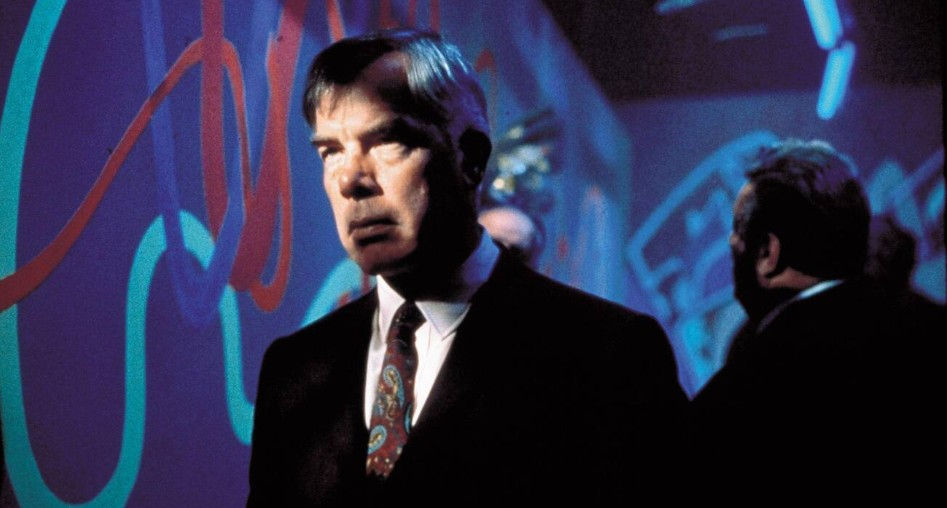
Walker (Lee Marvin – Parker in the book) is betrayed by his friend Mal Reese (John Vernon) in a heist on a money drop in the abandoned Alcatraz. As he dies, he imagines what might happen next. After shooting Walker, Reese takes the money and then Walker’s wife. Left for dead, Walker escapes, hunts down Reese thanks to advice from the mysterious Yost (played by Keenan Wynn). He goes after members of the mysterious ‘Organisation’ – Reese has passed the money to them to settle a debt – helped by his sister-in-law Chris (an excellent Angie Dickinson). It is a violent pursuit, many deaths, as Walker goes in search of his share of the money, though ultimately revenge is more important than wealth.
Point Blank is not a long film – just 92 minutes – and has a remarkable brevity in presentation. Boorman was influenced by Harold Pinter’s work with its few words as well as Jean Renoir and Alain Resnais. ‘The picture opened and did well’ Boorman said, ‘but it was not a blockbuster. Time magazine called it 'a fog of a film', and other reviewers were irritated by the fractured style, but many critics saw it as a kind of breakthrough for Hollywood. The French hailed it as a masterpiece.’ It is now seen as an outstanding sixties film, regarded as a masterpiece of cinema, and not just in France, and has inspired other filmmakers.

Point Blank launched the inaugural UK Film Noir Fest in 2024. I had seen it on television but never at the cinema. Here Lee Marvin, Los Angeles and the sinister ‘Organisation’ came to the mean streets of Weston-Super-Mare. It looked great on the big screen and this collection – with Boorman’s supervised and approved restoration – is the next best thing.
The colours which were so important to Boorman are as sharp as Marvin’s suits. In addition to the Dyer interview, extras include a documentary on Alcatraz, a look at mid-century Los Angeles, audio commentary by Boorman and Steven Soderburgh, Jim Jarmusch’s reflections on the film and Lee Marvin on the Dick Cavett show. It is a treat.
Thanks to the Criterion UK team we have a brand new copy Point Blank (1967) and a Criterion TOTE bag up for grabs; just send us your answer to the question below via our contact page by midnight on Friday 29th May to be in with a chance. Good Luck!
Question: John Boorman became the head of the BBC's Documentary Department in 1962. But which British city was that department based?


Comments